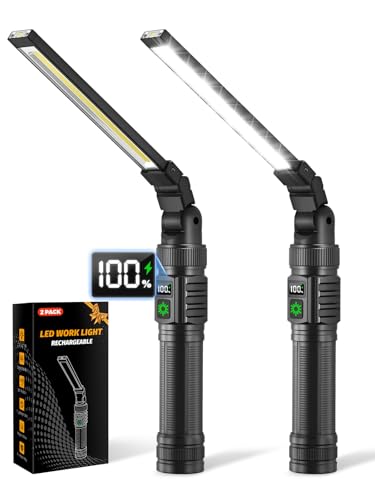
Both beat holding a flashlight in your teeth. They put light in different places, and on a roadside at night that difference matters.
The verdict up front
A headlamp first, magnetic lights second, and most drivers end up with both. A headlamp puts light exactly where you are looking and leaves both hands free, which is the thing that matters under a trailer or inside an engine bay. Magnetic work lights stick to the frame and flood a whole area, which is better for a task you are standing back from and better for being seen. Neither replaces a proper warning triangle.
At a glance
| Magnetic work lights | Headlamp | |
|---|---|---|
| Hands free | Yes | Yes |
| Light follows your eyes | No | Yes |
| Lights a whole area | Yes | No |
| Works in tight spaces | Only where it sticks | Yes |
| Helps you be seen | Somewhat | Poorly |
| Quantity in the pack | Two | One |
Choose the magnetic work lights if
You are working on something you can stand back from: a wheel, a landing gear, an airline, a trailer connection. They stick to any steel surface, they light the whole area rather than a cone, and having two means one on the work and one where you keep dropping things. Rechargeable is the right call, because a work light with dead alkalines is not a work light.
Choose the headlamp if
You are the one doing the work, in a tight space, with both hands busy. A headlamp is the single most useful light a driver owns for exactly that reason. Look for a model with a red mode, which preserves your night vision when you go back to the cab, and for one that is at least splash resistant, because you will use it in the rain.
Being seen is a separate problem
Neither of these makes you visible to traffic. A breakdown on a shoulder is one of the most dangerous situations in the job, and the equipment for that is warning devices placed at the distances the federal rule specifies, plus a hi-vis garment. Set the triangles out before you start work, not after. If you are on a narrow shoulder on a fast road, the safest option is often to stay in the cab with the belt on and call for help rather than to fix it yourself.
These comparisons are drawn from published manufacturer specifications and the general consensus of owner reports. We have not tested these products side by side, and nothing here is legal or compliance advice. Confirm current rules with FMCSA and with the states you run.