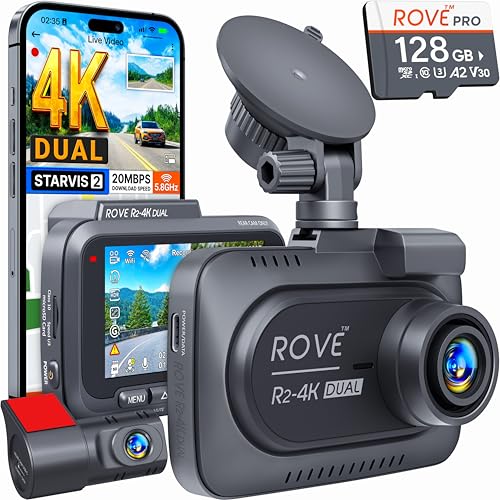
A dash cam earns its money on the day a four-wheeler cuts across your bumper and tells a different story. The question is how many of those stories you want covered.
The verdict up front
Two channels covers the crash. The third channel covers the cab. Front and rear is the standard pair and it handles the overwhelming majority of disputed incidents, because that is where the collisions are. A third inward-facing channel documents what was happening inside the truck, which protects you against allegations about the driver and is exactly the channel some drivers refuse on principle. Both positions are reasonable and you should decide deliberately.
At a glance
| Dual channel | 3-channel | |
|---|---|---|
| Front coverage | Yes | Yes |
| Rear coverage | Yes | Yes |
| Interior coverage | No | Yes |
| Storage consumed | Less | More |
| Records you as well as the road | No | Yes |
| Useful against distraction allegations | No | Yes |
Choose the dual channel if
You want the collision evidence and nothing more. Front and rear covers the cut-off, the rear-ender, the backing dispute and the staged claim, which is where nearly all of the value sits. Fewer channels also means less data, which means the loop keeps more days of footage on the same card before overwriting.
Choose the 3-channel if
You want the cab covered too. An inward camera answers allegations about phone use, seat belts and attention that are otherwise your word against a report, and it documents an incident at a dock or with a passenger. Know what you are agreeing to: it records you for every hour you drive, and if you sleep in the truck you will want it clearly not recording in the sleeper.
Recording audio has legal limits
Video on a public road is one thing and audio is another. Several states require the consent of everyone being recorded in a conversation, and that can apply to a passenger, a lumper or an officer at a window. Know your state’s rule, know the rule for the states you run, and know how to turn the microphone off. If you run under a carrier, their policy governs too.
The card is the part that fails
Dash cams write continuously and consumer memory cards are not built for it. Use a high endurance card, format it on a schedule, and check that the camera is actually recording rather than assuming a lit LED means it is. A camera with a corrupted card is the same as no camera on the day you need it.
These comparisons are drawn from published manufacturer specifications and the general consensus of owner reports. We have not tested these products side by side, and nothing here is legal or compliance advice. Confirm current rules with FMCSA and with the states you run.
Our Vantrue N4S review goes further into the interior camera question, and our Garmin Dash Cam 67W review covers the single-channel option and the trade a very wide lens makes.