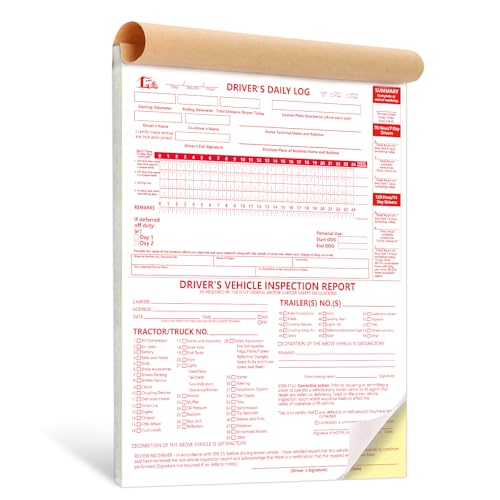
These are not really alternatives. One is a record of duty status. The other adds the vehicle inspection report to the same book. What decides it is which records you are required to keep.
The verdict up front
Buy the combined book. It costs a little more and it covers both records, and the driver vehicle inspection report is the one drivers forget until an inspector asks for it. Paper logs are still permitted in specific circumstances even under the ELD mandate, and a paper book also serves as the backup when an ELD malfunctions, which the rules require you to be able to do.
At a glance
| Plain log book | Log book with DVIR | |
|---|---|---|
| Records of duty status | Yes | Yes |
| Driver vehicle inspection report | No | Yes |
| Use as an ELD malfunction backup | Yes | Yes |
| Pages per book | More log pages | Split between both |
| Cost | Lower | Slightly higher |
| Books to keep track of | One, plus a DVIR pad | One |
Choose the plain log book if
You already keep inspection reports another way, electronically or on a separate pad, and you want the maximum number of duty status pages per book. Buying in a multi-pack is sensible either way, because the book you need is always the one that ran out two states ago.
Choose the combined book if
You want one thing in the door pocket that covers both obligations. Keeping the log and the inspection report in the same book means the record is together when someone asks for it, and it removes the failure mode where the log is perfect and the DVIR pad is at home. For most owner-operators this is the obvious purchase.
When paper logs are still allowed
The ELD mandate did not eliminate paper. Exemptions exist, including short-haul operation within defined limits, drivers who use paper logs on a limited number of days in a rolling period, driveaway-towaway operations, and vehicles older than a defined model year. There are also rules for what to do when an ELD malfunctions, which involve reconstructing and keeping paper records for a defined period. These are specific and they get updated, so read the current FMCSA rule for your operation rather than relying on a summary.
The DVIR is the quiet one
Drivers focus on hours and forget the inspection report. It is a separate requirement with its own rules about what must be recorded, when a defect must be certified as repaired, and how long the report is retained. It is also easy to satisfy once it is a habit, which is the argument for having it bound into the same book you already open every day.
These comparisons are drawn from published manufacturer specifications and the general consensus of owner reports. We have not tested these products side by side, and nothing here is legal or compliance advice. Confirm current rules with FMCSA and with the states you run.